Building Permit Trends and Impacts on Housing
February 20, 2026
Before housing construction begins, a project must go through a complex permitting process in the local area. While permits may seem like a routine step, builders nationwide have raised concerns about how complex and time-consuming this process is. Delay at this early stage can slow the pace of new construction, increase development costs, and affect housing affordability. For real estate professionals, understanding the permit pipeline is crucial because it provides valuable insights into future housing supply.
The Ongoing Housing Supply Challenge
Virginia Months of Supply, January
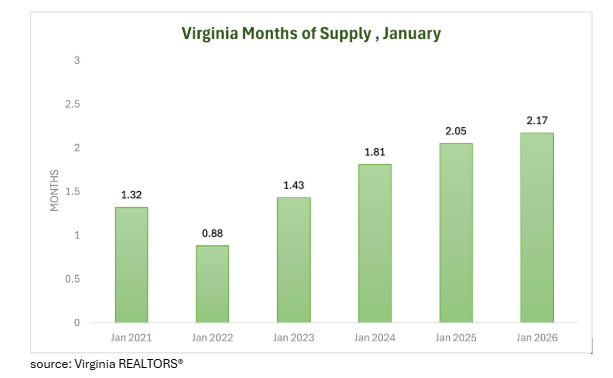
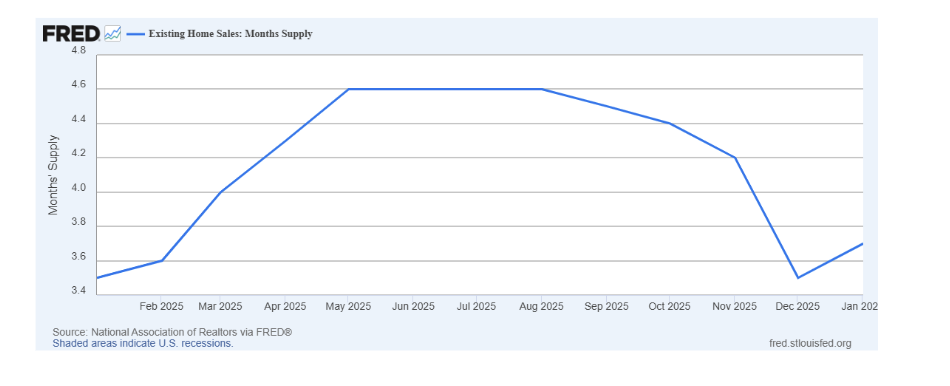
The housing shortage remains a significant challenge in today’s real estate market. A housing shortage generally reflects the gap between the current housing supply and the number of units needed to accommodate all households. According to a recent report from the National Association of REALTORS®, the supply of existing homes nationwide was 3.7 months in January 2026, slightly higher than 3.5 months both a year earlier and in December 2025. In Virginia, inventory remains even tighter. The state had 2.17 months of supply in January 2026, up modestly from 2.05 months the previous year. The months of supply metric is based on the average monthly sales over the past 12 months, divided by the current active listings. A balanced market typically has 5 to 6 months of supply. Although inventory has slightly increased, it remains below balanced levels, which continues to put upward pressure on prices and limits options for buyers.
What The Permit Data Shows
Throughout 2025, Virginia issued 33,223 building permits, according to the Census Bureau. This represents a decline of 836 permits from the previous year and is the lowest number since 2020, with a total decrease of 590 permits.

The latest data from the U.S. Census Bureau indicated a significant decline in new residential construction in 2025 compared to 2024. Nationwide, building permits fell by 3.6% year-over-year, housing starts decreased by 0.6%, and the number of completed housing units declined by 7.9% from 2024. If we are still in a housing shortage, why aren’t builders building more homes?
Why Builders Say the Permit Process Takes Too Long
Builders often cite the permitting process as a major obstacle in new home construction. While simple permits may be issued within days or weeks, complex projects can require 6 to 12 months (or longer) for approval. The main cause of these delays is the intricate approval process that each application must undergo.
A typical permit application requires review and approval from multiple agencies, including:
- Planning & Zoning Department
- Building Department
- Fire Department
- Public Works Department
- Environmental Department
- Health Department
- Utilities Department
- Transportation Department
- Parks & Recreation
Each department operates independently, with its own standards and processing timelines. In larger cities and counties, staff shortages and application backlogs can further extend review periods.
Zoning laws are also crucial. Local regulations control lot sizes, building heights, density, and permitted uses. Although these zoning rules aim to manage growth responsibly, outdated restrictions or slow approval processes can hinder the expansion of housing supply. In areas with high demand, these regulatory layers may unintentionally restrict supply.
The Cost of Time
Even a few additional months in the approval process can add costs for builders. These costs are often reflected in final home prices, contributing to affordability challenges.
Extended permit timelines can result in:
- Higher carrying costs on loans
- Increased exposure to interest rate fluctuations
- Inflated material costs
- Contractor scheduling disruptions
- Capital tied up in delayed projects.
Permits are not the sole factor affecting construction activity. Builders also face higher interest rates, labor shortages, financing difficulties, and affordability constraints for buyers. When permitting delays are added to these challenges, the effort to increase housing supply becomes even more difficult.
What This Means For You
Building permits act as a key predictor of future housing supply. Delays in approvals now can result in fewer homes being completed months later. Since Virginia’s inventory remains significantly below balanced levels, even slight slowdowns in construction can worsen supply shortages. While permit activity in Virginia has improved somewhat since 2019, larger national declines and approval delays reveal underlying challenges in increasing supply. For real estate professionals, staying informed about the permit pipeline is crucial for predicting future inventory and guiding clients effectively in a changing housing market.
You might also like…
A Snapshot of the Cost of Living in Virginia
By Abel Opoku-Adjei - September 10, 2026
The cost of living significantly influences where people decide to live, work, and buy homes. Virginia offers a diverse range of communities, from the more expensive suburbs of… Read More
From Pending to Closing: Why Housing Deals Fall Through
By Abel Opoku-Adjei - September 8, 2026
A home going under contract is an exciting milestone for buyers and sellers; however, a pending sale doesn’t always mean the sale will close. Between an accepted offer and closing day, various… Read More
Virginia Ranks Third in CNBC’s America’s Top States for Business
By Sejal Naik - August 27, 2026
CNBC released its annual rankings of America’s Top States for Business in 2026 last month. Virginia ranked third in the list of 50 states across 10 broad categories… Read More