Whose House? A Look at Household Types in Virginia
February 2, 2026
The traditional structure of an American household is alive and well but has shifted over the past 50 years to make way for more non-traditional ones. Virginia at both the state and local level has also experienced a transition in its household types. Let’s look at how things have changed since 2014 and the reasons behind the movement.
People Living Alone
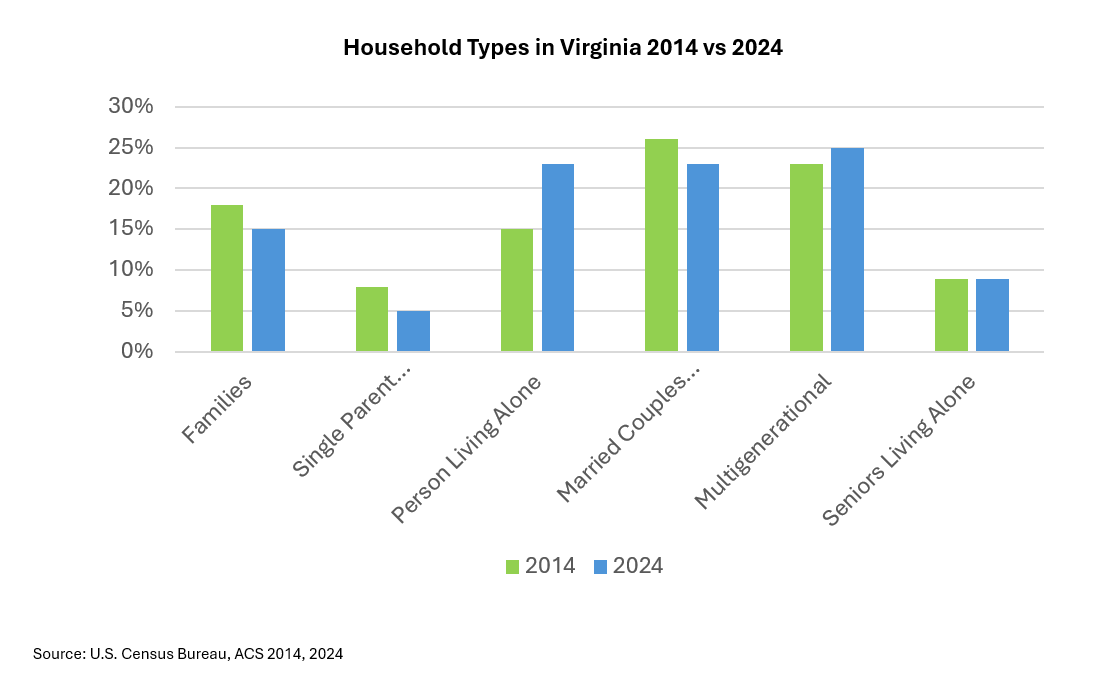
There was a surge in the share of single-person households in Virginia, which went up eight percentage points to 23% in 2024. Single households also shot up in each of the states nine metro areas with Lynchburg seeing the biggest rise in householders living alone. Other markets such as Roanoke and Hampton Roads also saw a sharp increase in individuals living alone. The pandemic does play a role in the rise of single person households as the desire for more space in affordable markets surged. Societal norms have also changed with the median marriage age for both men and women going up or many choosing not to marry at all.
Multigenerational
Multigenerational households, which are two or more adult generations living together has been steadily growing since the 1970’s. A report by the National Association of REALTORS® found that 17% of home purchases in 2024 were multigenerational. One of the reasons this living arrangement has become popular is because of the racial and ethnic makeup of the country. Those who are Black and Hispanic are more likely to live in this type of household, along with those who are immigrants. Multigenerational households also allow people to share the costs of housing, which has become unaffordable for many buyers, particularly younger ones. In Virginia, there were over 1.1 million multigenerational households in 2024, up from 810,931 in 2014. Charlottesville saw the share of multigenerational households jump four percentage points to 29% in 2024. Northern Virginia saw multigenerational households increase by three percentage points over the last 10 years.
Families
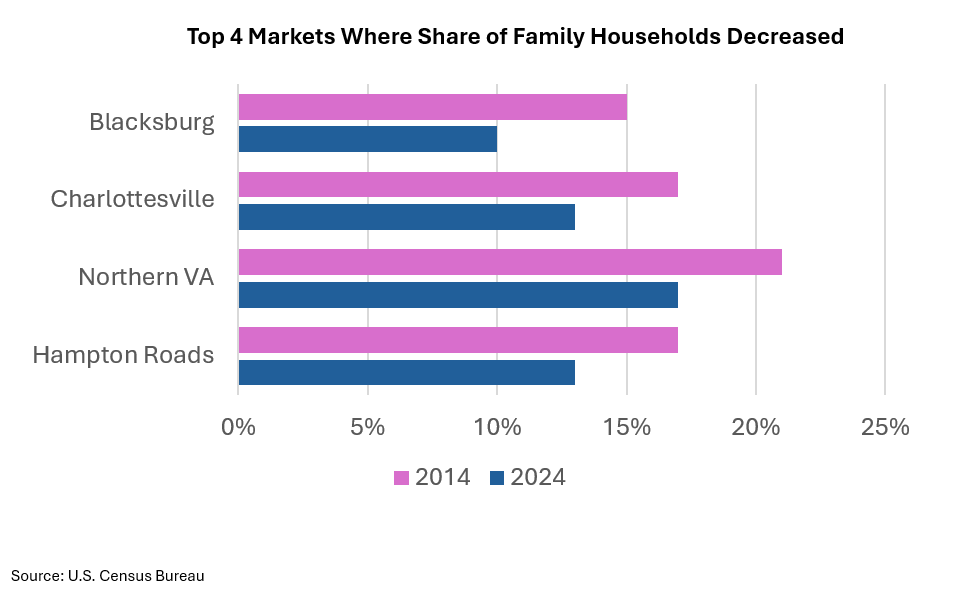
Family households made up 64% of total households in the US in 2024 per the Census Bureau, but that number has dipped over the last several decades. When looking at total households in Virginia, the share of those with families has fallen from 18% in 2014 to 15% in 2024. The rise in single households is one explanation for the decline, the other being fertility rates which have been falling since 2007. Several metro areas across the state saw a drop in family households including Charlottesville and Northern Virginia, both falling by four percentage points and Blacksburg with the share going from 15% to 10% in 2024. Harrisonburg was the only market where family households grew over the 10-year period.
Married Couples without kids
In Virginia, married couples without children accounted for 23% of all household types in 2024, down from 26% in 2014. Most metro areas saw the percentage of married couples without kids also fall within this same period. In Harrisonburg the share of married couples without kids saw a significant drop, going from 30% to 22% in 2024. Lynchburg also experienced a decline in this household type, which went down six percentage points over the last 10 years. The decrease in the number of married couples over the last 50 years plays a part in the reason we are seeing a reduction in this type of household.
For more information on housing, demographic, and economic trends in Virginia, be sure to check out Virginia REALTORS® other Economic Insights blogs.
You might also like…
An Analysis of Investor Activity Across Virginia
By Sejal Naik - October 5, 2026
Institutional investor activity is an increasingly discussed issue in the conversations about housing supply shortages. To understand its overall impact, we quantify the share of investor ownership of… Read More
RPAC: Purpose, Impact, Balance
By D.J. Spiker - October 5, 2026
If you’ve ever wondered what RPAC actually does, you’re not alone. RPAC, the REALTORS® Political Action Committee, has helped REALTORS® participate in the political process since 1969. It… Read More
From Pending to Closing: Why Housing Deals Fall Through
By Abel Opoku-Adjei - September 8, 2026
A home going under contract is an exciting milestone for buyers and sellers; however, a pending sale doesn’t always mean the sale will close. Between an accepted offer and closing day, various… Read More