Moving In or Out? Domestic Migration in Virginia
October 29, 2025
In-migration is one of the key drivers of economic growth. It can help expand a state’s labor force, increase consumer spending, and lead to more residential development. Based on the latest population data from the U.S. Census Bureau, Virginia had net positive domestic migration, that is, more people moved into Virginia from other states than Virginian’s left and moved to other states. This is the first time we’ve had net positive domestic migration in four years. Let’s break down migration patterns, specifically domestic migration in Virginia and changes at the metro and local levels.
Net domestic migration for a state is the difference between those who move into the state from another state (in-migration) and those who move out of a state for another state (out-migration). In 2024, Virginia experienced positive net domestic migration with 5,284 people moving into the state last year. This is a shift from the out-migration the state has been experiencing for the last few years.

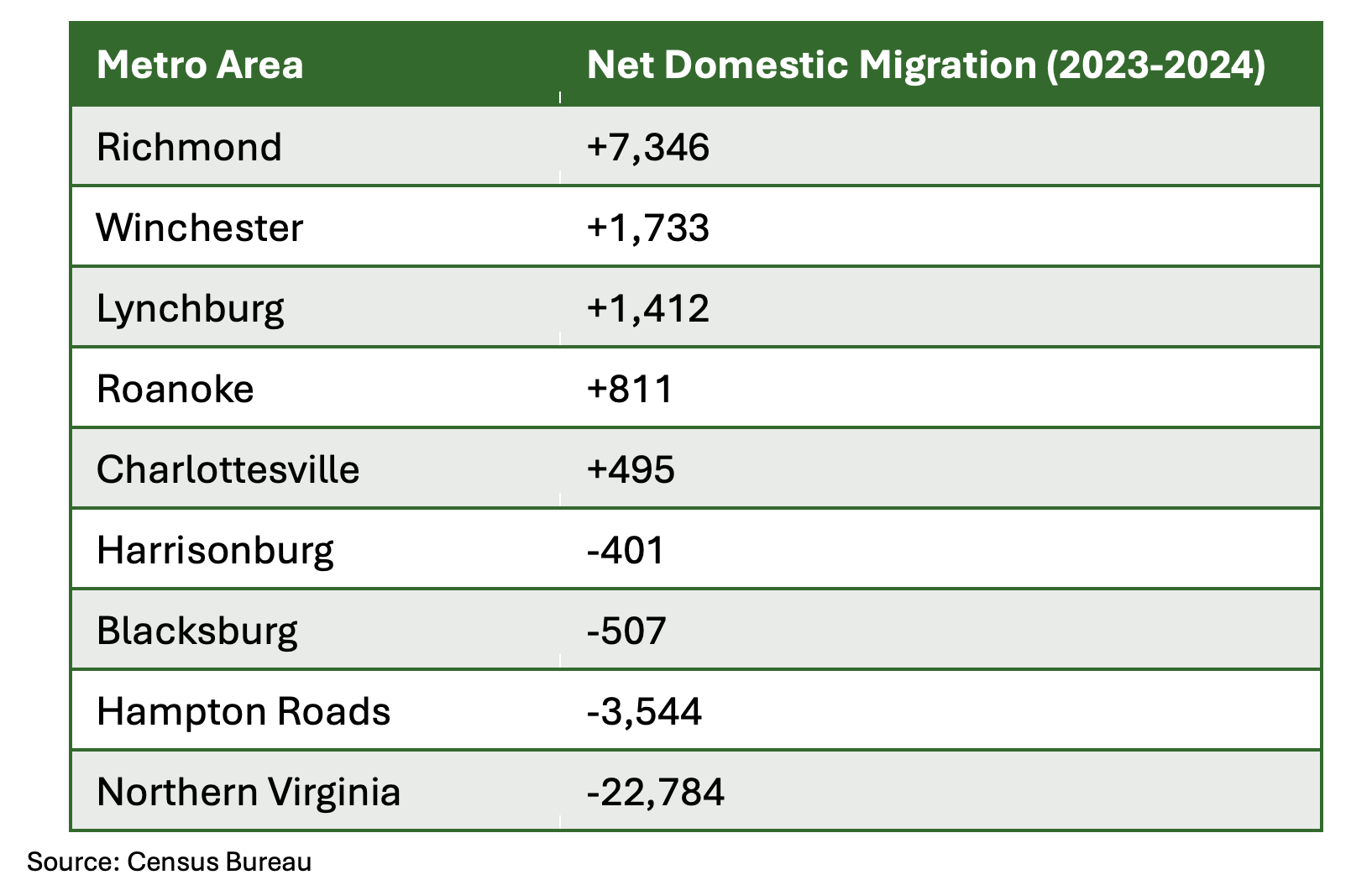
Domestic migration movements varied across metro areas and age groups in 2024. The Richmond region led the state in domestic migration with a net of 7,346 more people moving into the area than out of it. When looking at the demographics of residents in Richmond, those 18-24 years old led all other age groups in moves from outside the state (7.3%) and from other counties in the state (10.7%). There was also a large share of 25–34-year-olds who moved within the same county (9.9%). Winchester had the second largest increase in domestic migration with a net of 1,733 people moving to the region, a good portion of whom were 18-24-year-olds relocating from a different county. One of the state’s biggest markets, Northern Virginia, had the largest drop in domestic migration with a net of 22,784 residents moving from the area in 2024. Other metro areas, such as Hampton Roads and Blacksburg, also experienced net negative domestic migration levels last year.
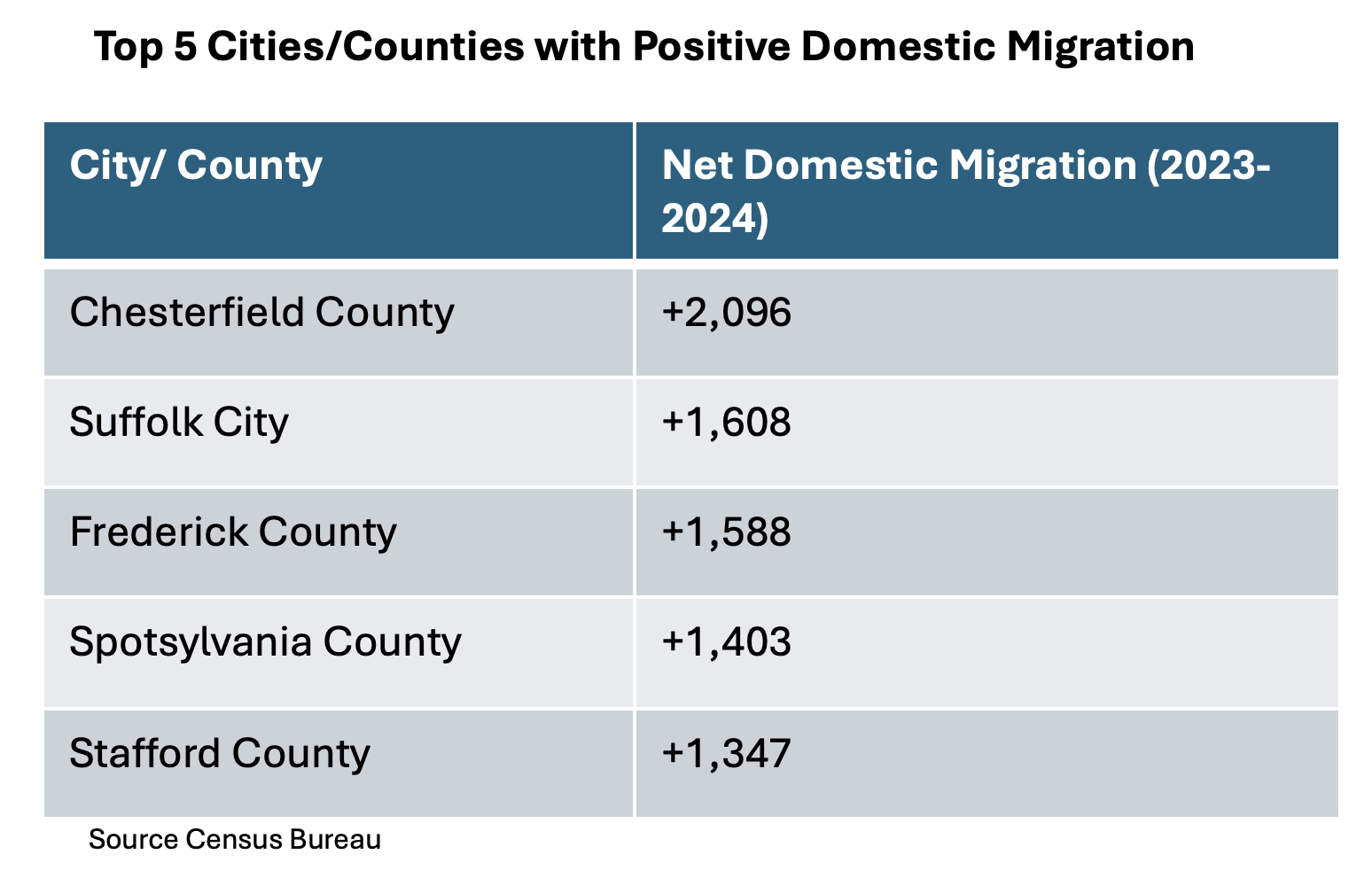
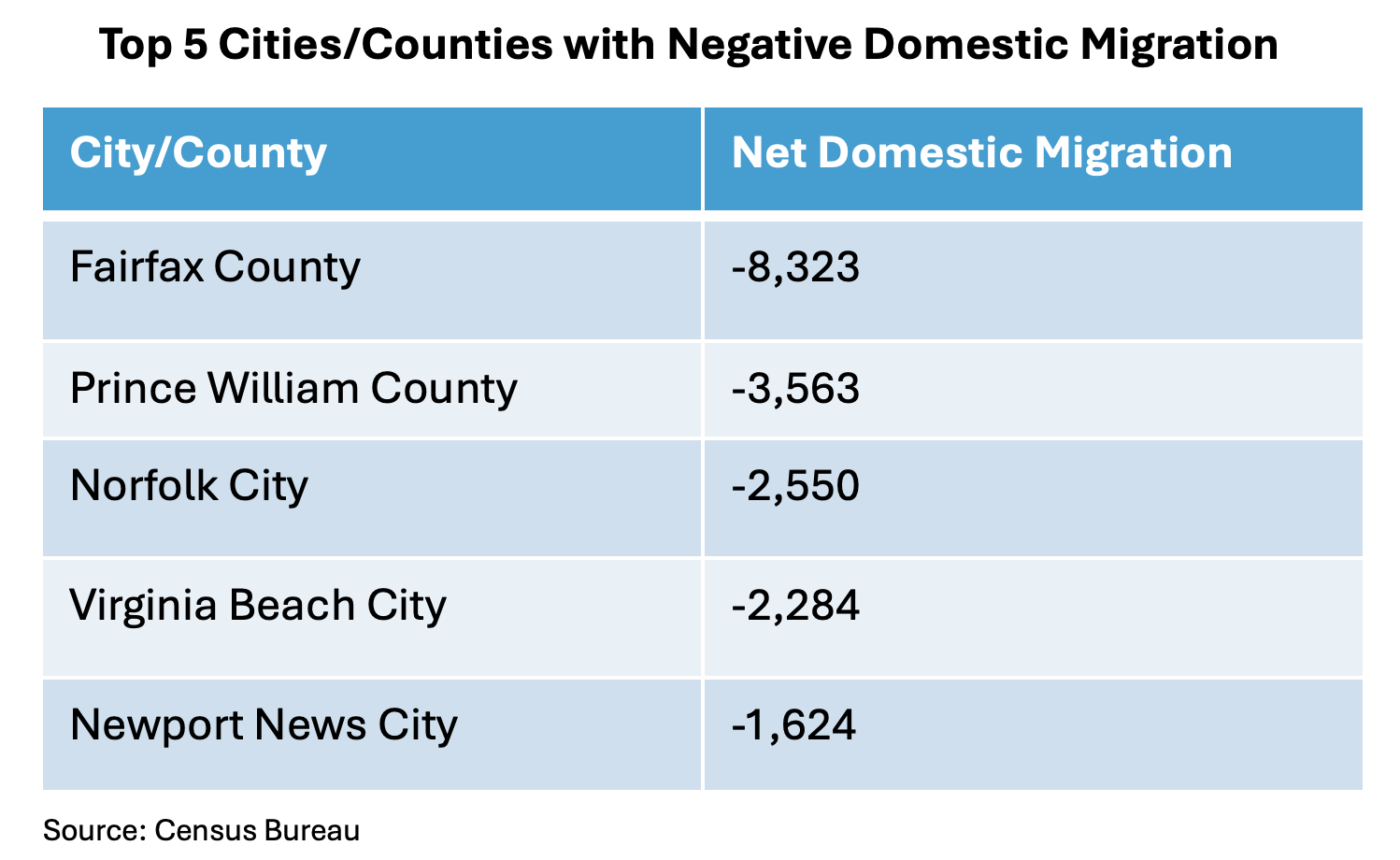
At the local level, Chesterfield County took the top spot for net positive domestic migration, with 2,096 people settling into the area in 2024. The market with the second largest inflow of new residents was Suffolk City with 1,608 people relocating to the city. Stafford County rounded out the list with a net of 1,347 people moving there. There were also many cities and counties in the state that experienced a drop-off in net migration. Two counties in Northern Virginia had the sharpest decrease in domestic migration: Fairfax County with 8,323 net fewer residents and Prince William County with 3,564 net fewer residents. Local areas like Newport News in the Hampton Roads metro made up the rest of the list with a net drop of 1,624 residents.
As the demographic and financial landscape of the country shifts, it will be important to watch how migration patterns evolve across state and local levels.
For more information on housing, demographic, and economic trends in Virginia, be sure to check out Virginia REALTORS® other Economic Insights blogs.
You might also like…
Key Takeaways: January 2026 Virginia Home Sales Report
By Virginia REALTORS® - February 23, 2026
Key Takeaways There was a modest uptick in sales activity statewide to start the year. There were 5,881 home sales in Virginia in January 2026, outpacing last January… Read More
Building Permit Trends and Impacts on Housing
By Abel Opoku-Adjei - February 20, 2026
Before housing construction begins, a project must go through a complex permitting process in the local area. While permits may seem like a routine step, builders nationwide have raised concerns about how complex and time-consuming this process is. Delay… Read More
Migration to Virginia: More People Moving In
By Sejal Naik - February 18, 2026
Each year since 2005, the U.S. Census Bureau determines whether respondents of its surveys lived in the same residence a year ago. If people have moved, then the… Read More