Understanding the Renter Lock-In Effect
May 19, 2026

The lock-in effect has been a big topic over the last few years with rates hovering in the 6-7% range and home prices much higher than what they were pre-pandemic. But homeowners are not the only group feeling the effect; renters have also been experiencing their own version of this. Let’s look at where renters are staying longer and how rising housing costs are impacting them nationally and here in Virginia.
Renters are Staying Longer
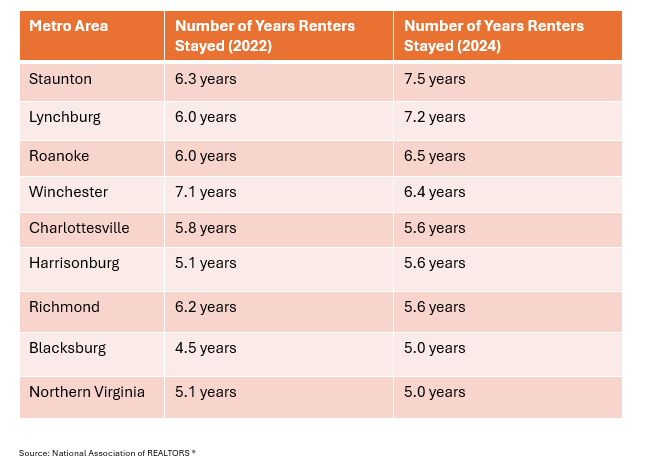
According to the National Association of REALTORS ® renters lived in their home an average of 6.5 years in 2024, up from 5.9 years in 2019. The number of years renters stayed in their homes varied at the metro level across different states with renters in Virginia staying 5 to 7.5 years on average. Renters stayed longer in the state’s smaller to mid-size metro markets like Lynchburg, going from 6 years to 7.2 years in 2024 and Roanoke with the average tenure at 6.5 years. Staunton saw the biggest jump in renter tenure going from 6.3 years in 2022 to 7.5 years in 2024. The two markets with the biggest decrease in tenure were Winchester and Richmond.
Higher Rental Costs Make Homeownership More Challenging
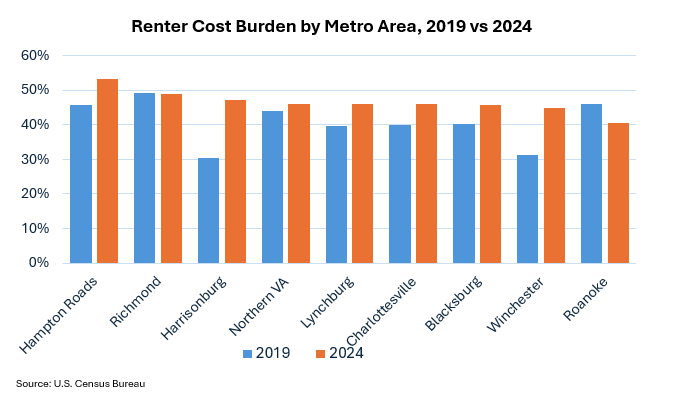
The high cost of housing has not only kept owners in their homes longer, but also renters. Although rent growth has slowed, it is still elevated, with prices in the U.S. up 35% since 2020. In Virginia, the median monthly housing costs for renters was $1,646 in 2024, per the Census Bureau. After adjusting for inflation, this is a 7.1% increase from 2019. The rise in rent has led to higher cost burden levels for renters in the state (spending more than 30% of their income on housing) going from 42.9% in 2019 to 46% in 2024. At the metro level, the most cost-burdened renters were those in the Hampton Roads area with the rate at 53.3%, 7.5 percentage points higher compared to five years ago. Burden levels jumped up the most in smaller metro areas like Harrisonburg and Winchester. For renters in Roanoke, cost burden levels dropped 5.4 percentage points to 40.6% in 2024.
Renters are not only feeling the rising costs in the rental market, but also on the for-sale side. According to the 2026 NAR Home Buyers and Sellers Generational Trends Report, 46% of buyers cited high rent/mortgage payments as the main expense that delayed them from saving for a down payment or a home. Higher home prices have pushed many renters, who are potential home buyers, out of the market with many needing to make over six figures to buy a home.
An example of this is in Virginia, where a renter would have needed a household income of about $140,000 to afford a median price home in 2025 without spending more than 28% of their income on housing. This is based on the annual statewide median sales price of $425,000, a 10% downpayment, a property tax of 1.25%, and a 6.15% interest rate on a 30-year fixed loan.
For renters, the lock-in effect has not only kept them in the rental market longer but also limited what they can afford if they choose to become home buyers. To maintain a balanced market, it is vital for renters to have access to homeownership while also freeing up rental supply for those who need it.
For more information on housing, demographic, and economic trends in Virginia, be sure to check out Virginia REALTORS® other Economic Insights blogs.
You might also like…
Key Takeaways: NLIHC 2025 National Renter Survey
By Dominique Fair - September 23, 2026
The National Low Income Housing Coalition (NLIHC) released their first National Renter Survey highlighting renters’ decisions and experiences related to moving, housing costs and accessibility and habitability. Let’s… Read More
Key Takeaways: August 2026 Virginia Home Sales Report
By Virginia REALTORS® - September 23, 2026
Key Takeaways Sales activity in many parts of the Commonwealth slowed down in August as mortgage rates continued to rise. There were 8,985 closed sales statewide, 438 fewer… Read More
A Snapshot of the Cost of Living in Virginia
By Abel Opoku-Adjei - September 10, 2026
The cost of living significantly influences where people decide to live, work, and buy homes. Virginia offers a diverse range of communities, from the more expensive suburbs of… Read More