Highlights from the NAR 2026 Home Buyers and Sellers Generational Trends Report
May 1, 2026
Every year the National Association of REALTORS® releases their Home Buyers and Sellers Generational Trends Report, highlighting housing trends and characteristics across different generations. Let’s explore some of the key takeaways from the report and how things have changed demographically among the different age groups.
First-time Buyers Decreased
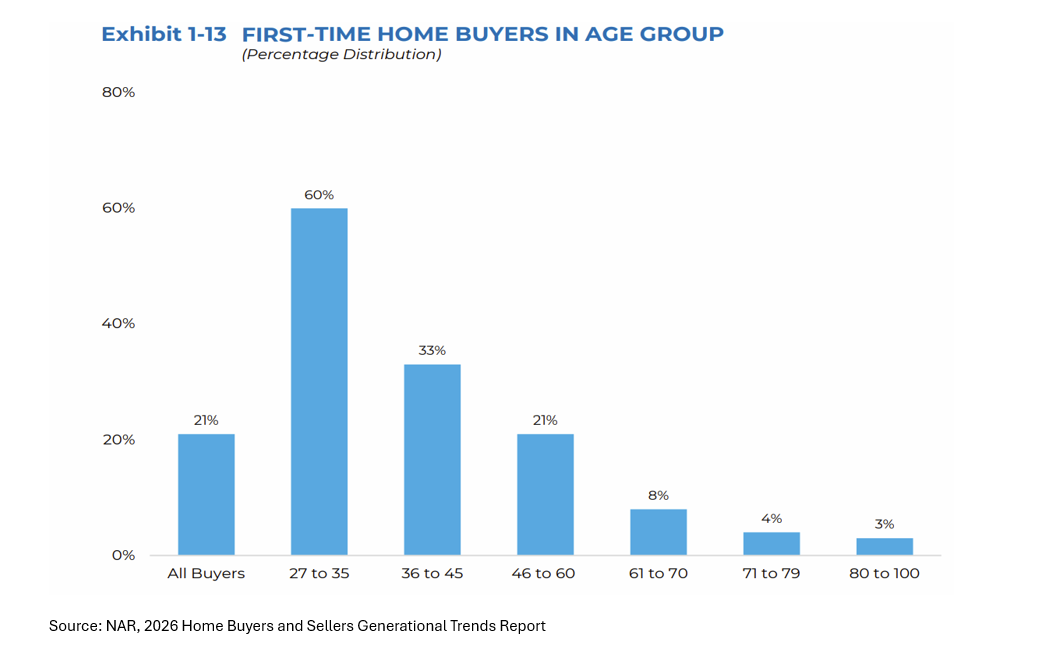
The total share of first-time home buyers fell, going from 24% to 21% this year. Younger Millennials (27 to 35 years old) had the highest percentage of first-time buyers at 60%, but this is down significantly from the previous year when it stood at 71%. Millennials have the highest median income ($132,700) compared to all other generations, but higher home prices and mortgage rates are still impacting their ability to purchase a home. Many have turned to multi-generational living to help save money, with 55% of Younger Millennials citing this as the reason they bought a multi-generational home. Generation X was the only age group to see an increase in the share of first-time buyers, moving up one percentage point to 21%.
Baby Boomers Remain the Top Buyers and Sellers
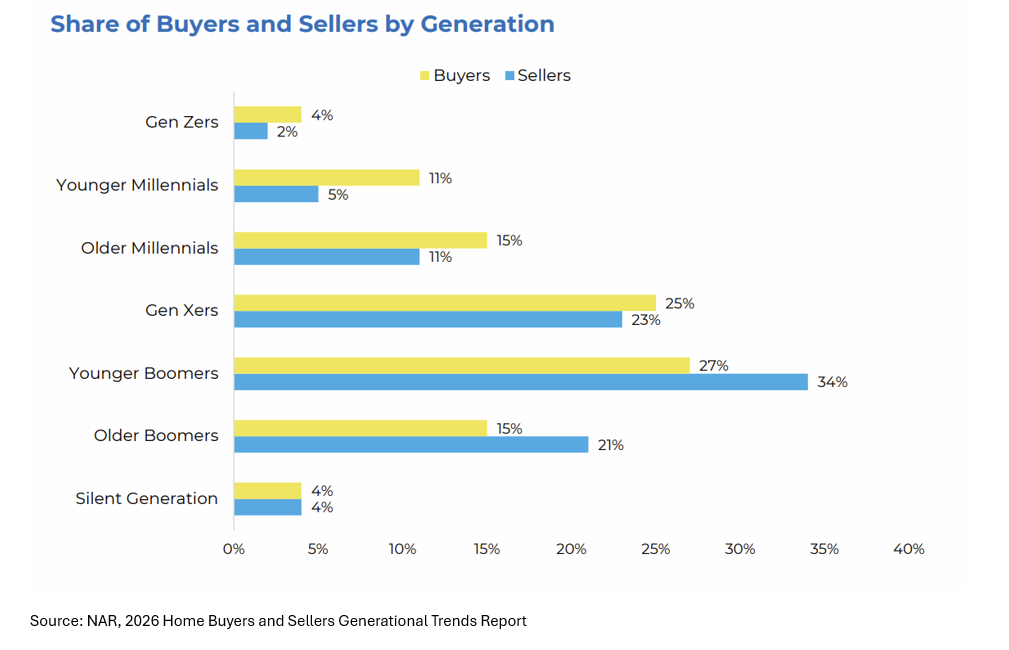
For the second straight year, Baby Boomers accounted for the largest share of home buyers at 42% and home sellers at 55%. Housing tenure plays a key role in these majorities with Baby Boomers living in their homes for over 15 years, giving them time to build up equity that is used for a future home purchase. Over half of all Younger Boomers (61 to 70 years old) and Older Boomers (71 to 79 years old), used proceeds from a primary home sale as the down payment for their next home. Another factor motivating this generation was the desire to be near friends and family, with 41% of sellers and 31% buyers citing this as the reason why they purchased or sold a home.
Gen-Z’s Market Presence is Small but Influential
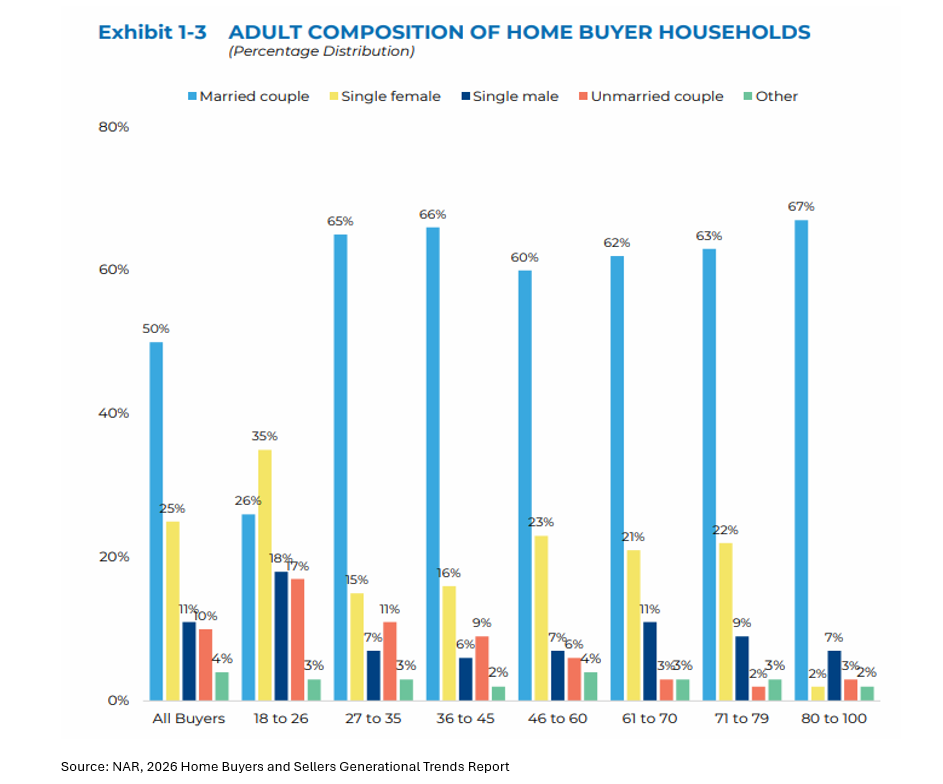
The youngest cohort in this report, Generation Z (18 to 26 years old), made up the smallest share of home buyers this year at 4%, up from 3% the previous year. Gen Z may account for a smaller share of the market, but they show demographic patterns that will have a lasting impact. Gen Z saw the share of married couple households drop from 39% to 26% as the percentage of unmarried couples jumped to 17%, up from 10% last year. The number of single female buyers among this age group surged to 35%, the highest across all generations. They are also more racially and ethnically diverse with the number of Asian/Pacific Islander home buyers in this age range jumping from 5% to 10% this year. When purchasing a home they choose smaller properties (1,600 sq ft) and consider heating and cooling costs and commuting costs to be at the same level of importance (43%). This generation also bought homes that were not far from where they previously lived (12 miles) and were convenient to friends and family.
As the landscape of the housing market continues to change, so do the demographics of buyers and sellers. Keeping up with reports like this one will provide agents and brokers with the tools needed to help their clients, both present and future, in the home buying process.
For more information on housing, demographic, and economic trends in Virginia, be sure to check out Virginia REALTORS® other Economic Insights blogs.
You might also like…
From Pending to Closing: Why Housing Deals Fall Through
By Abel Opoku-Adjei - September 8, 2026
A home going under contract is an exciting milestone for buyers and sellers; however, a pending sale doesn’t always mean the sale will close. Between an accepted offer and closing day, various… Read More
What the New Federal Housing Law Means for Virginia Real Estate Professionals
By Sejal Naik - August 3, 2026
After years of back-and-forth in Congress, the 21st Century ROAD to Housing Act is now law. Passing with big bipartisan majorities, it took effect on July 11,… Read More
Highlights from the 2026 JCHS State of the Nation’s Housing Report
By Dominique Fair - July 6, 2026
Every year the Joint Center for Housing Studies at Harvard University (JCHS) releases their State of the Nation’s Housing Report, showing where the housing market stands and how… Read More