Comparing Virginia’s Permit Activity with Population Growth
November 16, 2026
Virginia’s housing market has been facing supply constraints for almost two decades. To understand this trend, we analyzed building permit activity in Virginia and compared it with the population trends over time. We further compare these trends across Virginia’s neighboring states to the South that have been top destinations for Virginia residents looking to move.

As seen in Figure 1, we compare permit levels for single-family attached/detached buildings as well as multifamily buildings per 1,000 residents in the past 30 years. Single-family permit levels compared to population levels have dropped considerably in this period. Permit activity has not recovered to levels prior to the financial crisis in the early 2000s for single-family housing even though population growth has continued. On the other hand, multifamily permit levels have seen modest growth, with a significant bump during the years immediately following the pandemic.

In Figure 2, we compare single-family permit-to-population levels for Virginia and its neighboring states to the South between 2015 and 2025. While the ratio of single-family building permits to population levels have remained unchanged over the past decade in Virginia, all other neighboring states – North Carolina, South Carolina, Georgia, and Tennessee – saw permit levels rise compared to their population growth. These neighboring states have increased their building permit levels in response to the population growth. The building activity that has followed has allowed for residents in those states to have more housing options to choose from. For example, the months of supply in the for-sale market far outpaces Virginia in most of these places.
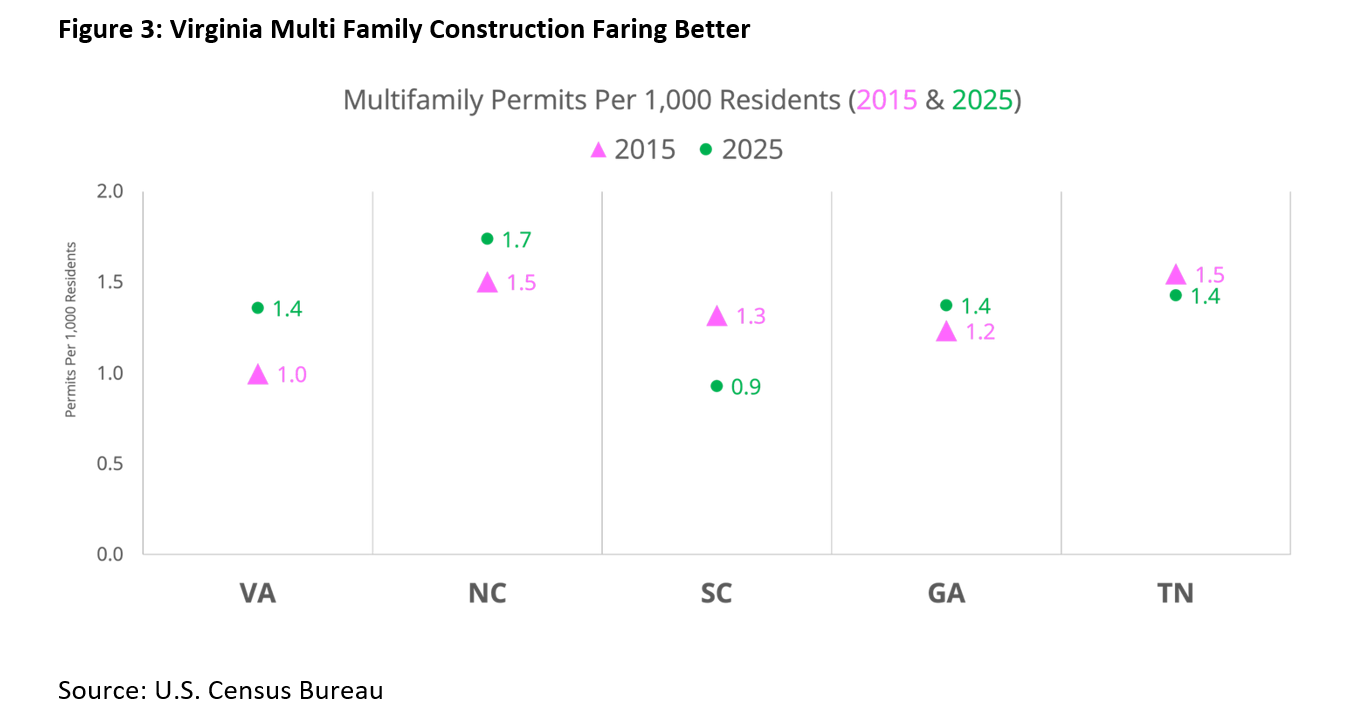
In Figure 3, we compare multifamily permit-to-population levels for Virginia and its Southern neighboring states between 2015 and 2025. Virginia fares better in terms of multi-family housing growth. Virginia has seen multi-family permit levels compared to its population increase over the past decade. North Carolina and Georgia have also experienced a similar trend in multi-family permit activity. However, South Carolina and Tennessee have seen a decline in multi-family permit levels compared to a decade ago.
Supply constraints remain a significant issue in Virginia’s housing market. Years of underbuilding have impacted Virginians’ home-buying decisions. To continue strengthening Virginia’s attractiveness as a state for families to move to and to continue providing current Virginia residents with sufficient supply-side relief, it is essential to support more housing construction. Rethinking permitting processes and easing permitting challenges across the Commonwealth is an essential piece of the larger housing supply puzzle.
For more information on housing, demographic and economic trends in Virginia, be sure to check out Virginia REALTORS® other Economic Insights blogs and our Data page.
You might also like…
Virginia’s Market and Third Quarter Rising Rates
By Abel Opoku-Adjei - November 2, 2026
Mortgage rates continue to shape housing market activity by affecting affordability, purchasing power, and buyers’ decisions about when to enter the market. As elevated borrowing costs have challenged… Read More
Key Takeaways: September 2026 Virginia Home Sales Report
By Virginia REALTORS® - October 22, 2026
Key Takeaways Home sales activity decreased in September for the second consecutive month. There were 8,410 closed sales across the Commonwealth, 373 fewer sales compared to a year… Read More
Three Multifamily Market Trends from the Third Quarter of 2026
By Sejal Naik - October 22, 2026
Each quarter, through its Multifamily Market report, the research team at Virginia REALTORS® analyzes the trends and changes in the multifamily market. Here, we share the key insights… Read More