3 Features of One of Virginia’s Key Demographics: Older Adults
May 12, 2025
According to the 2025 National Association of REALTORS® Home Buyers and Sellers Generational Trends report, Younger Boomers (aged 60 to 69) made the highest share of buyers and sellers in the United States. People aged 60 or older made up 46% of home buyers and 58% of home sellers last year. In Virginia, almost 1 in 5 people are aged 60 or older, emphasizing the importance of this demographic group to the commonwealth’s real estate market. Here, we look at the highlights from the UVA Weldon Cooper Center’s article on the regional variations and features of Virginians aged 60 or older.
1. Rural regions in Virginia had higher concentrations of older adults.
36.8% of the population in Virginia’s Eastern Shore region was aged 60 or older – the highest concentration of older adults in the state. Southwest and Southside regions followed closely. Northern Virginia had the lowest share of population aged 60 or older (18.2%). Natural increase (births minus deaths) is a key component of population change. A decline in birth rates is the primary cause of an increase in the share of the aging population. This natural increase component has declined more dramatically in the rural regions of Virginia where deaths have outpaced births since 2018.
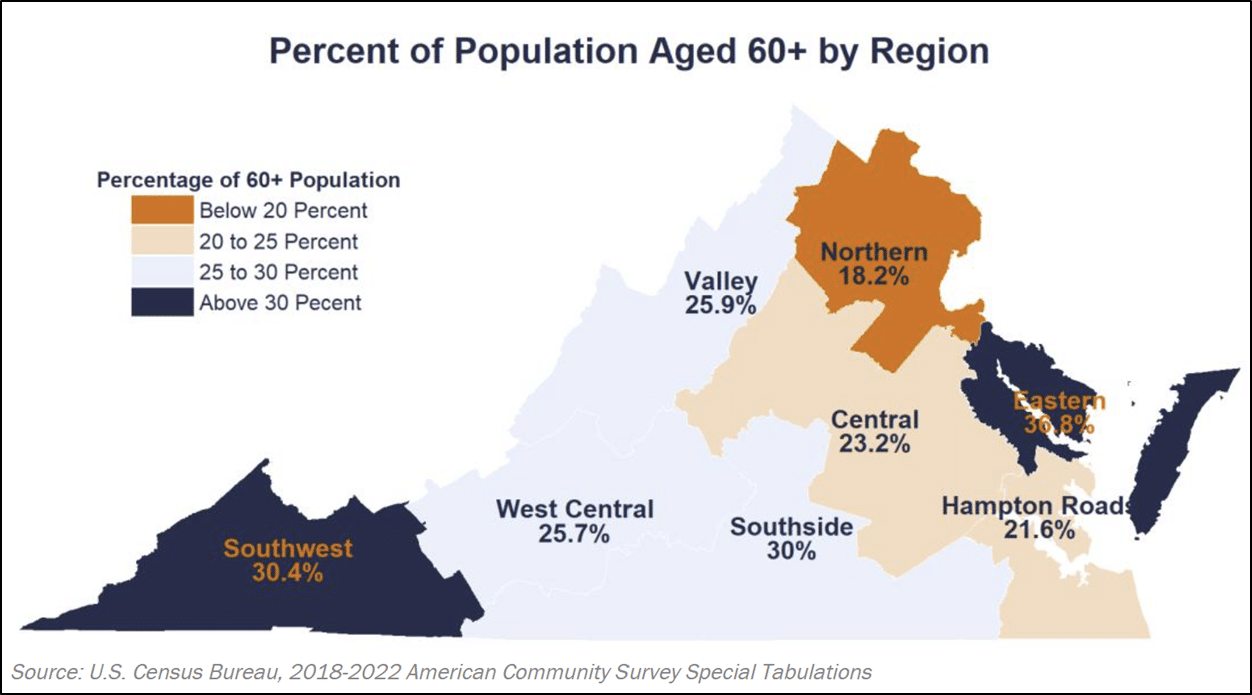
2. Regions with higher educational attainment of older adults tend to see higher labor force participation from them as well.
Overall, 11.9% of older adults in Virginia had less than a high school education. This rate was higher in the Southwest (22.2%) and Southside (22.1%) regions. In Northern Virginia, on the other hand, more than half of its older adults held a bachelor’s degree or higher. At the same time, almost 40% of the older adults in Northern Virginia are still a part of the labor force. On the other hand, labor force participation among older adults was much lower in the Southwest (20.0%) and the Southside (24.7%).
3. Older adults face unique challenges across different regions that are very likely to have an impact on their housing decisions.
Firstly, social isolation is a potential challenge for older adults, with one in four older adults living alone in Virginia. Northern Virginia had the lowest recorded level of older adults living alone (20.2%) while Southside saw the highest share of older adults living alone (28.1%). Secondly, older adults with disabilities require special accommodation in terms of home care services, transportation help, and community programs. Southwest (41%) and Southside (36.5%) had the highest rate of older adults with a disability in Virginia. This was followed by the Eastern Shore, Shenandoah Valley, and Hampton Roads regions. Lastly, 8.2% of older adults lived below the poverty level in Virginia, with Southside, Southwest, and Eastern Shore regions with the highest rates in the state.
Virginia’s population has a significant concentration of residents aged 60 or older, albeit with a wide spectrum of variations in their socio-economic characteristics. The prevalence of this demographic presents unique opportunities for real estate market participants, and it is important to meet their needs and preferences with deliberate efforts.
For more information on housing, demographic and economic trends in Virginia, be sure to check out Virginia REALTORS® other Economic Insights blogs and our Data page.
You might also like…
Key Takeaways: February 2026 Virginia Home Sales Report
By Virginia REALTORS® - March 19, 2026
Key Takeaways Home sales activity picked up in February, furthering the upward trend at the start of 2026, fueled by a combination of higher inventory and lower mortgage… Read More
Home Price vs. Household Income in Virginia
By Sejal Naik - March 2, 2026
Affordability constraints are talked about often when discussing the housing market situation in Virginia. Potential first-time home buyers, especially, have been in a tough spot as they look… Read More
Key Takeaways: January 2026 Virginia Home Sales Report
By Virginia REALTORS® - February 23, 2026
Key Takeaways There was a modest uptick in sales activity statewide to start the year. There were 5,881 home sales in Virginia in January 2026, outpacing last January… Read More